I haven't done much today; I've been sort of sick, with cold sweats and such, so I slept most of today, and then ran out to CVS and for food....good times. Tomorrow I think will be a day of catching up on work, Pinkberry with Jessi, and laundry.
Saturday, July 12, 2008
saturday
So, I'm wearing a UNC shirt and walking down the hall, and this girl asks me if I go to UNC - and she's wearing a UNC hat. It turns out she's in the journalism school. We had a long convo about how much we missed NC and Chapel Hill and how much we loved our programs. She lives in Carrboro, and it was so great to reminisce about Weaver St and everything.

Friday, July 11, 2008
1 in 4
This post doesn't have anything to do with cancer, but it DOES have something MCH-related. The new issue of Glamour magazine, with Christina Aguilera on the cover, also has on the cover the article tagline: Where Rapists Walk Free (Yes, it's in America). Forgive me, but why is that supposed to be so shocking? I opened it up and found that the article was about the Yankton Sioux tribe, and how 1 in 3 Native American women will be raped in her lifetime. This is not so far from the statistic that 1 in 4 American women will be raped in her lifetime. This is not the only place in America where rapists walk free - take a look at our college campuses, the grad school classrooms, the professional sports leagues and any room you happen to be in. Rapists are everywhere, we just don't know who they are. Have we forgotten the Kobe Bryant trial, where rape-shield laws in place for years were broken left and right and no one - not even the feminist organizations - made a peep? Have we forgotten that 2/3 of rape victims know their attacker? The recidivism rates of those who rape are astonishing, and chances are, if an individual has sexually assaulted someone - a stranger, a friend, a date - once, they will do it again. 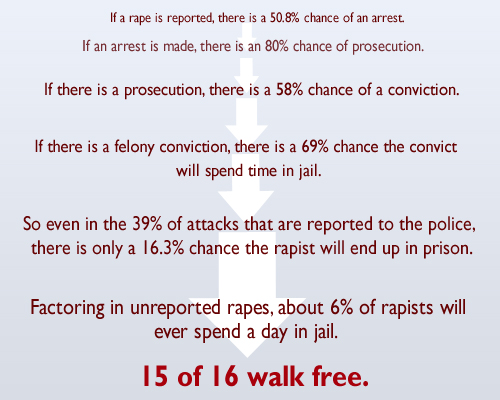
This is from RAINN - the Rape, Abuse, and Incest National Network. This is a wonderful organization that Tori Amos helped create, and they do amazing things. When I was a rape crisis counselor, many callers would tell us they received some form of help from RAINN.
Thursday, July 10, 2008
stellar day
 This is my friend Alex. We went to Muhlenberg (my undergrad) together, and at first, we couldn't stand each other - for the entire first year, pretty much. And here we are, 10 years later (can you believe it's been that long since we started undergrad?), I was one of her bridesmaids, and we're still in touch. She was in town for a couple days, and we met for coffee. Good times.
 Today.....today was a very, very, very good day. Most of my days at MSKCC are good. But today, I got to see one of my good friends from Muhlenberg and catch up a bit, and then in the afternoon, I went to the main hospital to listen to a lecture by Rosabeth Kanter. She is a chair at Harvard Business School, written 17 books, and was named one of the "50 Most Powerful Women in the World". She lectured on confidence and becoming a good leader, and she was excellent. It was only an hour and a half lecture, but she was so dynamic and had so many good points - like it's not the talent that matters in an organization, but the talent in the team. If a company has stars in its department, that's great, but a true star who is committed to advancing the team will mentor others, and work with everyone else, and not seek solely their own advancement. That's how I feel my experience at MSKCC has been. I've gotten the impression that the attendings are very eager to help and mentor. Another one of her points was that confidence is simply the expectation of a good outcome. But in order to achieve that outcome, you have to do the work. She used MSKCC as an example. MSK is one of the top cancer centers in the world, and many people here have an abundance of confidence. But they've done the hard work to get here, and continue to do the hard work - the reading of journals, the attending of conferences, of mentoring students and researchers, of pushing their limits - which reinforces their confidence, because they expect a good outcome. And success breeds success. But my favorite thing of all that she said was this: If you look at anything in the middle, it looks like failure. If you look at anything in the middle of doing it, it can look like you're failing - you're not getting the results you wanted, you're failing a test, you're not accepted to the program you want - but you haven't reached the end yet, unless you give up. So true, and we often forget that. I know I do.
AND, sitting just 3 seats to my left was Eugenie Obbens. She is a neuro-oncologist, and one of her specialties is meningiomas, or slow-growing, "benign" brain tumors. I've read about her, and here she was, next to me!
The only thing that shatters dreams is compromise. - Richard Bach
High Point: seeing Alex, getting free bagels and pastries from Starbucks
Low Point: paying over $5 for one box of Smart Start cereal
Wednesday, July 9, 2008
favorite song right now
This is my favorite song of the moment....it's a cover of the song by Jeff Buckley.
I (heart) Starbucks
 So, I go to CVS this morning to grab a Vitamin Water on my way to work, and right there on the front doors, there's a big, handwritten sign saying: THE PHARMACY IS OUT OF PLAN B. PLEASE COME BACK TOMORROW. Must have been a busy night in Manhattan last night. It's a good thing Plan B can be taken up to 72 hours after the fact.
 I got the new issue of CURE magazine (Cancer Updates, Research, & Education) last week, and I just got around to reading it on the subway home today. There's an article about women living with metastatic breast cancer, because these women are often not talked about so much. Metastatic breast cancer is largely ignored during pink ribbon events - there's hardly any booths about Stage IV cancer, if any - and support groups are not really geared toward these women, and even other breast cancer patients avoid women with metastatic breast cancer at times, because it reminds them of what could happen. It's true - Stage IV breast cancer, aka metastatic breast cancer, cannot be cured. It can be treated. Managed. Somewhat controlled. The median survival time of these women has usually been between 18 - 30 months after diagnosis, but now patients are living with mets (metastases) longer. The goal then is to keep it controlled as well as possible while still maintaining quality of life.
No one likes thinking about cancer, let alone metastatic cancer. Not even those of us who work in the field. Standing on the subway, reading this article, I read these words and even I began to feel lightheaded: "...25 percent of women diagnosed with invasive breast cancer [who] later learn that so-called seed cells from the first tumor traveled to another part of the body and set up shop....Indeed, when a woman dies from breast cancer, as some 40,000 will this year, it is almost always a result of the breast cancer taking over one or more vital organs - most often the liver, lungs, or brain...." So nearly a quarter of women initially diagnosed with invasive breast cancer will be diagnosed with mets. My brain is trying to wrap around this and failing miserably. I read this and don't want to believe it. I read this and it is hard not to be discouraged. I read this and wonder who, in my life, will be part of this sobering statistic. A family member? Mentor? Friend? Myself? And then that familiar, desperate feeling of we have to do something now takes over, and I am reminded why I got into oncology again in the first place. So I could do something about this feeling. Some days, though, it's a struggle.
Also discouraging in this issue is the discussion about pediatric cancer drugs. See, the problem is that almost no new pediatric cancer drugs have been developed in years and years. It is not profitable, so it's not really done. In 2004, the drug Clolar (a leukemia drug) debuted on the market - the first cancer drug in 20 years to reach the pediatric market ahead of adults. Drug companies need big sales, and since by and large, most children are healthy, pediatric cancers are too scarce to be profitable. In dollar terms, it's not worth it. TWO-THIRDS of all meds used in kids - for ANY medical condition - have not been tested and labeled for pediatric use. Last year, the Archives of Internal Medicine reported that 93% of children with cancer receive at least one drug that has not been approved for pediatric use.
"Psycho-oncology is the only subspecialty in cancer that is involved in the care of EVERY patient at EVERY visit, with EVERY cancer and with EVERY treatment." - James Holland, MD (he wrote like, THE book on Cancer Medicine and yes, he is the husband of the founder of psycho-oncology who is @ MSKCC, Jimmie Holland).
High Point: my "free iced coffee at Starbucks on Wednesdays" card, finding my Chaco flips
Low Point: the seemingly endless line at Jamba Juice, the rude man who butted in front of me in line at aforementioned Starbucks - and we were THE ONLY TWO in line
Monday, July 7, 2008
I (heart) books
I am reading a wonderful book that I had to share on here. Let me explain.....those of you who know me well know that I am always reading at least one book that's not for school. I love reading, and always have. Almost nothing makes me happier than a day at Borders or Barnes & Noble. In the past few years, I've read a lot of medical books, both textbooks and other non-fiction. The Anatomy of Hope is one of my favorites. I am currently reading a book by a pediatric neurosurgeon who is at Hopkins. Perhaps you've heard of him. Ben Carson. I'd always seen his book on the shelf, picked it up, and put it back down for some reason. My friend David is a pediatric oncologist at Hopkins, and one day he mentioned Ben Carson, and it jogged my memory. So last week, I was at B&N, and Carson's book Gifted Hands was on the table, and it was only $5. He has a new one out, but this is his first book. It tells his story, of how he grew up poor, in inner-city Detroit, and through nothing but hard work and the standards set upon him by his mother, he became the director of pediatric neurosurgery at Johns Hopkins at the age of 33. I am only on page 88, but I have nothing but respect and awe for him already. He writes about how easy it is to make excuses, to blame failures on "the system", or other things - he writes about how he could have blamed others for his circumstances, but instead, he chose a different path. He wasn't given anything - he struggled, it was not an easy path by any means, and he had his share of trouble (who doesn't?) - and it's really inspiring to read how he made his decisions and the drive he has within him.
Other books I am reading now: Hospital by Julie Salamon, which details a year at Maimonides Medical Center in NY; Happiness in a Storm: Facing Illness and Embracing Life as a Healthy Survivor by Wendy Schlessel Harpham, and of course, the books I have to read for Elle magazine. (For those of you who don't know, I was picked as one of the readers who reviews books each month for the magazine, and I'm reviewing for the October issue - hey, I get free books!)
High Point: finding my Dunkin Donuts gift card, not tripping up the subway steps
Low Point: cutting my toe open, malfunctioning subway car doors
the cost of time
Today in the NY Times there's an interesting story, and it brings to mind some questions. The story addresses the cost of cancer drugs, especially when the drugs are shown to NOT provide as good of a result as initially thought. Avastin is a drug that is commonly used for advanced breast cancer, colon cancer, and lung cancer, and it can run up to $100,000 a year. Basically, the drug cuts off the tumor's blood supply - but studies have shown that it really only prolongs life by a couple of months, and is actually less effective than it was thought to be when originally approved by the FDA. And yet it is one of the most popular cancer drugs in the world. So here's the question: is it worth it? How do we measure that? Personally? Professionally? Economically? How can we be rational and methodical when we are, essentially, putting a price on life, on time?
Being in the field and also having had loved ones and friends have cancer, I don't have an answer. At first glance, I might think, yeah, if empirical studies are showing it's not that effective, and the cost is so staggeringly high, it might not be worth just a few months. But if one of my family members or friends - or I - had cancer, would I fight like hell to live and encourage them to do the same? You bet. Would I be grasping at anything to give me a little more time? Of course. But now we get into murkier water - the whole "quality or quantity" issue. I have seen elderly people go through surgeries and chemo when their bodies are already weakened and it's known that there's no curing them. It's a horrible thing to watch. But I've also been on the other side, with the fear and uncertainty and wishing something could be done. So I'm not sure how I feel about this whole issue, with the Avastin and whether it's worth it. How do we put a price on time?
Here's to the crazy ones. The misfits. The rebels. The troublemakers. The round heads in the square holes. The ones who see things differently. They're not fond of rules and have no respect for the status quo. You can quote them, disagree with them, or vilify them. But the only thing you can't do is ignore them. Because they change things. They push the human race forward. And some may see them as the crazy ones, we see genius. Because the people who are crazy enough to think they can change the world are the ones who do. -- Jack Kerouac
Sunday, July 6, 2008
Midpoint
 My grandmother likes to wear stockings with capri pants.
  My nephew and I.
  Giving Trey a pre-bedtime bottle. Yes, a bottle.
  My mom's dog, Mozzie, who thinks he's a person.
I just got back to NY after a weekend in NJ, dogsitting and babysitting. It's nice to be back in the city - I actually met someone in the elevator who goes to Meredith College (I was wearing a UNC shirt), and I'm running out to get food soon. I have a love/hate relationship with the city, as I think most people do. I always have a feeling of wow, it's great to be home after being out of the city for a day or two - racing up Madison in a cab, looking at all the stores, eateries, parks, I love the fact that I am here. But it's also crazy expensive - more expensive than I remember it being, and my lungs definitely notice the difference pollution-wise. But NY has always felt like home in a strange way - the way NC has come to feel, although NY felt that way immediately. It's like Carrie said, on Sex and the City - she's "dating" the city. The relationship is a complicated one, but underneath it all, there's love.
I am halfway through my internship, and I leave the city a month from tomorrow. And in two weeks or so, I go to OH for the LAF Summit on Survivorship, which should be a great time. The time has absolutely flown by, I cannot believe it. I've started calling patients for the Retinoblastoma study, and entering data, and this week, along with attending the Psychiatry Fellows' Core Courses (lectures on various topics 3 times a week), I will be attending a lecture on good leadership. I'm pretty excited for the week ahead of me. I feel like I say that a lot, but it's true.
Wednesday, July 2, 2008
it's Wednesday

We love moms and babies!

More good times.
High Point: crossing the street and having a car stop at the very last minute before the red light, and then having a sweet-looking grandfatherly older man curse out the driver. Only in NY.
Low Point: balancing my checkbook.
Tuesday, July 1, 2008
on a lighter note......
 This is my friend Jessi. She's happy because she had
 a coconut margarita and Pinkberry. But not together. No.
 My nephew, Trey, being a monkey.
High Point: NOT tripping up the subway steps for the first time since last Wednesday, finding the new Starbucks Mocha Mint Chip Frappuccino Light.
Low Point: Being so tired that I forgot to swipe my MetroCard as I went through the turnstile and slamming into the bar, much to the amusement of the people behind me.
Subscribe to:
Posts (Atom)
